Elements of Criminal Litigation in India
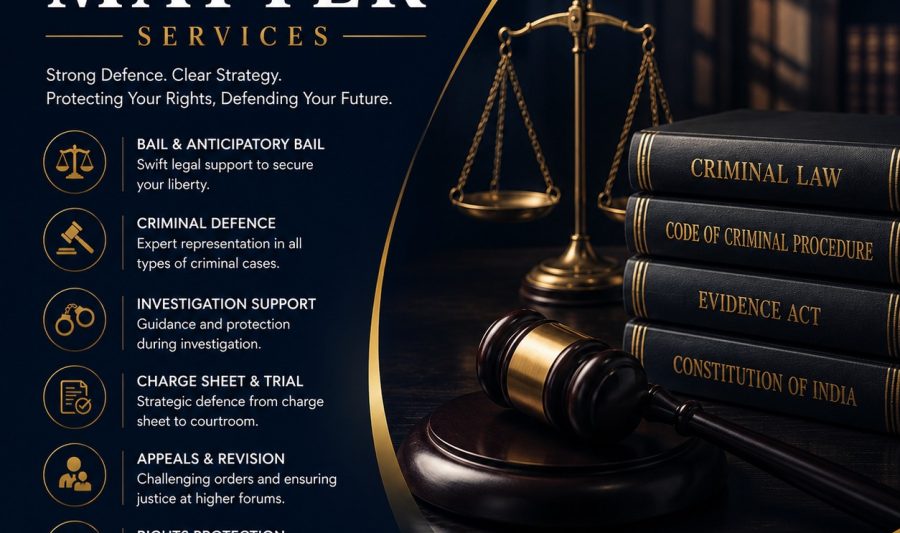
Criminal litigation involves the legal process through which an alleged offence is investigated, prosecuted, defended, and decided by a criminal court. The major elements include:
- Complaint or FIR – Criminal proceedings may begin with an FIR for a cognizable offence or a complaint before the Magistrate.
- Investigation – Police collect evidence, record statements, conduct searches, and take other lawful investigative steps.
- Arrest and Bail – Depending on the offence and circumstances, an accused may be arrested and may seek regular or anticipatory bail.
- Charge Sheet or Final Report – After investigation, the police submit their report to the competent court.
- Cognizance by Court – The court considers the material and takes cognizance where legally appropriate.
- Framing of Charges – The court determines the specific offences for which the accused must stand trial.
- Prosecution Evidence – The prosecution presents witnesses and documentary or electronic evidence.
- Cross-Examination – The defence challenges the prosecution’s evidence through cross-examination.
- Defence Evidence – Where appropriate, the accused may present evidence in support of the defence.
- Final Arguments – Both sides present their legal and factual arguments.
- Judgment – The court may acquit or convict the accused.
- Sentencing and Appeals – Following conviction, sentencing may take place, and the parties may have appellate or revisional remedies available under applicable law.