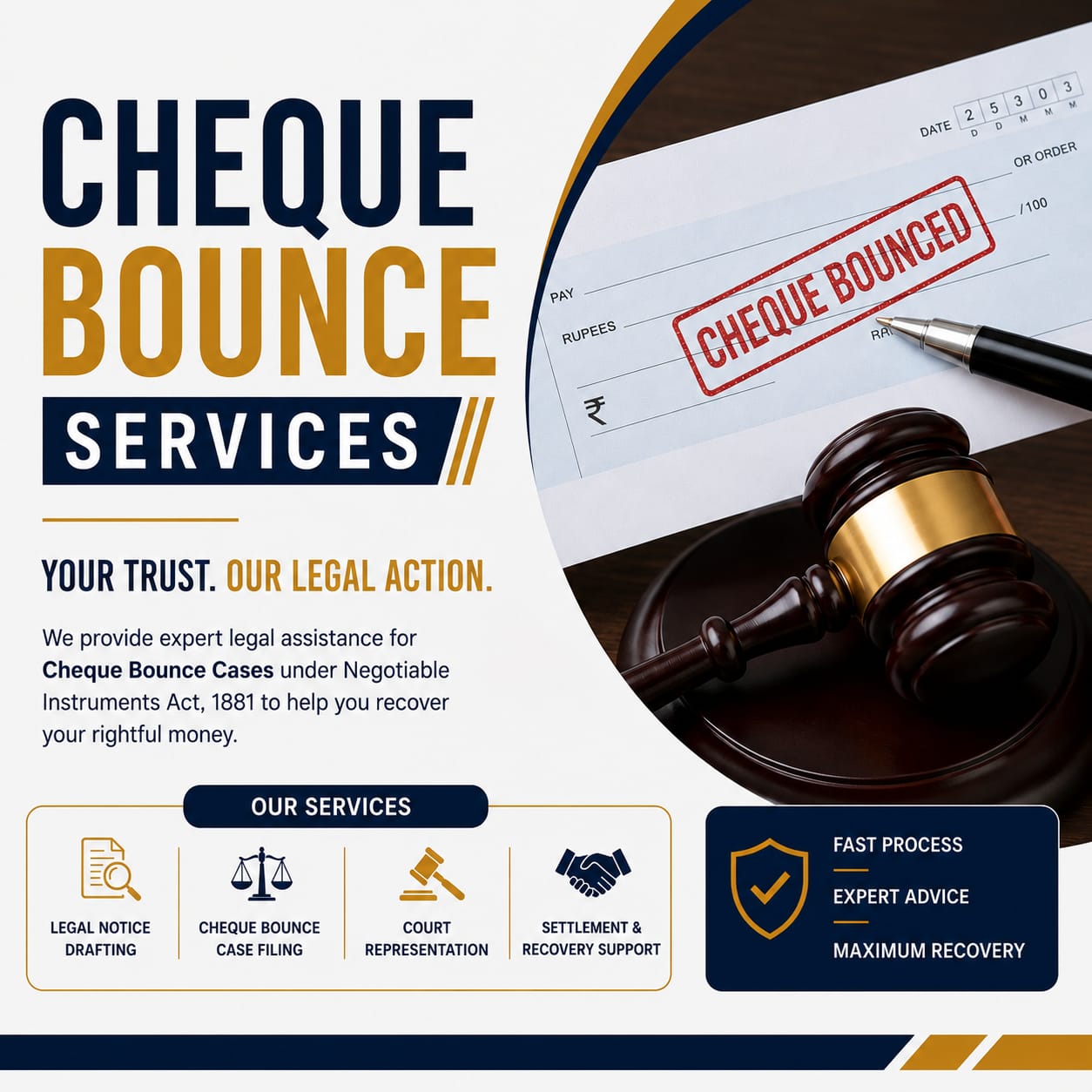
Cheque Bounce Cases in India: Legal Process, Section 138, Notice and Remedies
A cheque is often issued with the expectation that a payment will be completed without difficulty. However, when a cheque is returned unpaid by the bank, it can create financial pressure, uncertainty, and disputes between the parties. This situation is commonly known as a cheque bounce or cheque dishonour.
Cheque bounce cases are particularly common in business transactions, personal loans, property dealings, and other financial arrangements. For a person waiting to receive money, a dishonoured cheque can delay important payments. For the person who issued the cheque, it can lead to a legal notice and possible court proceedings.
Indian law provides a legal framework for addressing certain cheque dishonour matters. Section 138 of the Negotiable Instruments Act, 1881, deals with cheque dishonour in specified circumstances, subject to statutory requirements. Understanding the applicable law, legal notice requirements, and limitation periods can help both parties make informed decisions.
What Are Cheque Bounce Cases?
Cheque bounce cases arise when a bank returns a cheque without making the payment. The bank may issue a return memo stating the reason for dishonour, such as insufficient funds or an amount exceeding the agreed banking arrangement.
Not every dishonoured cheque automatically results in criminal liability. For a case under Section 138 of the Negotiable Instruments Act, the cheque must meet the legal requirements, including being issued towards a legally enforceable debt or other liability.
For example, suppose a business supplies goods to a customer and receives a cheque towards the outstanding invoice. If the cheque is returned unpaid because of insufficient funds, the supplier may have grounds to consider legal action under Section 138, provided the statutory conditions are fulfilled.
The circumstances of each transaction matter. The underlying agreement, payment records, cheque details, and communication between the parties may all be relevant to assessing the available legal remedies.
What Is Section 138 of the Negotiable Instruments Act?
Section 138 of the Negotiable Instruments Act, 1881, establishes legal consequences for certain instances of cheque dishonour. Its purpose is to support the reliability of cheque-based payments and provide a remedy when a cheque issued towards a legally enforceable debt or liability is dishonoured under the circumstances covered by the law.
The provision generally applies when a cheque drawn on a bank account is returned unpaid because of insufficient funds or because the amount exceeds the arrangement made with the bank.
However, the law also requires compliance with specific procedural conditions. These include presenting the cheque within its validity period, sending a written demand notice within the prescribed period, and allowing the drawer the statutory opportunity to make payment.
Under Section 138, the maximum punishment can extend to imprisonment for two years, a fine of up to twice the cheque amount, or both. The actual outcome depends on the facts, evidence, applicable law, and court proceedings.
Common Reasons for Cheque Dishonour
A cheque may be returned unpaid for several reasons. Identifying the reason mentioned in the bank return memo is an important first step.
Common reasons include:
- Insufficient funds: The account does not contain enough money to honour the cheque.
- Exceeds banking arrangement: The cheque amount exceeds the limit arranged with the bank.
- Stop-payment instructions: The drawer has instructed the bank not to process the cheque. The legal effect depends on the facts and applicable law.
- Signature-related issues: The bank may return the cheque because the signature does not match its records.
- Account-related issues: An account closure or another account-related problem may result in dishonour.
- Technical or procedural defects: Errors in the cheque or other banking requirements may prevent payment.
The reason for dishonour is relevant, but it does not by itself determine whether a Section 138 complaint will succeed. The nature of the liability, the circumstances of issuance, and compliance with statutory requirements must also be examined.
Legal Procedure for Cheque Bounce Cases in India
Understanding the procedure can help a person avoid missed deadlines and unnecessary disputes.
1. Obtain the Bank Return Memo
When a cheque is dishonoured, the bank ordinarily provides a return memo explaining the reason. Keep this document safely, along with the original cheque and the records relating to the transaction.
The return memo can help establish when the cheque was dishonoured and why the bank did not process the payment.
2. Verify the Underlying Debt or Liability
Before proceeding, review the transaction for which the cheque was issued. Relevant documents may include invoices, loan agreements, written acknowledgements, account statements, payment records, and correspondence.
This step is important because Section 138 concerns a legally enforceable debt or other liability. The legal position may differ where the cheque was issued as security, where the underlying obligation is disputed, or where the liability had already been discharged.
3. Send a Legal Notice Within the Prescribed Period
Under Section 138, the payee or holder in due course must send a written demand notice within 30 days of receiving information from the bank about the dishonour.
The notice should clearly identify the cheque and demand payment of the cheque amount. It should also comply with the applicable legal requirements.
Incorrect details, an unclear demand, or a delay in sending the notice may create complications. Therefore, it is sensible to have the documents reviewed before issuing the notice.
4. Allow 15 Days for Payment
After receiving the statutory demand notice, the drawer has 15 days to pay the cheque amount.
If payment is made within this period, the essential default condition for initiating a Section 138 complaint is generally not satisfied for that notice. The position should still be assessed in light of the facts and any other legal issues.
If the drawer does not make payment within the prescribed period, the payee may become entitled to initiate a complaint, subject to the remaining legal requirements.
5. File the Complaint Within the Applicable Limitation Period
Where the statutory conditions are met, the complaint under Section 138 is generally required to be filed within one month from the date the cause of action arises after expiry of the 15-day payment period.
The law allows a court to consider a delayed complaint if sufficient cause for the delay is established. However, relying on a possible extension can be risky, so the prescribed deadline should be treated seriously.
The appropriate court and jurisdiction must also be determined under the applicable provisions of the Negotiable Instruments Act.
6. Participate in Court Proceedings
After a complaint is filed, the matter proceeds according to the applicable court procedure. The court may consider the cheque, bank return memo, demand notice, service records, evidence of the underlying liability, and the defence raised by the accused.
Depending on the circumstances, the matter may involve settlement discussions, evidence, legal arguments, and a judicial decision.
The duration and outcome of a cheque bounce case depend on the facts, court schedule, procedural issues, and the conduct of the proceedings.
What Documents Are Required for Cheque Bounce Cases?
Proper documentation can make it easier to assess the legal position and prepare a complaint or defence.
Depending on the case, useful documents may include:
- Original dishonoured cheque.
- Bank return memo.
- Copy of the statutory demand notice.
- Postal receipt, tracking details, or other relevant proof of dispatch and delivery.
- Invoice, loan agreement, or other documents supporting the transaction.
- Bank statements and payment records.
- Written acknowledgements or correspondence between the parties.
- Relevant business records, account statements, or supporting agreements.
Not every case requires every document listed above. The required material depends on the facts, the legal issues involved, and the stage of the proceedings.
How Can a Cheque Bounce Lawyer Help?
Cheque bounce disputes can involve more than simply proving that a cheque was returned unpaid. The parties may disagree about the debt, the purpose of the cheque, the amount outstanding, or whether the statutory requirements were followed.
A cheque bounce lawyer can assist by reviewing the transaction and identifying the legal issues that need attention.
Legal assistance may include:
- Examining the cheque and bank return memo.
- Reviewing documents relating to the underlying debt.
- Preparing and issuing a demand notice.
- Calculating the relevant statutory deadlines.
- Drafting and filing a complaint where legally appropriate.
- Preparing a defence against a cheque bounce complaint.
- Representing a client during court proceedings.
- Advising on settlement, payment arrangements, or other lawful remedies.
Seeking advice at an early stage may help reduce avoidable procedural errors and clarify the available options. However, no lawyer can guarantee a particular court outcome.
Legal Remedies Available to the Payee
A person who receives a dishonoured cheque may have different remedies depending on the transaction and the circumstances.
Criminal Proceedings Under Section 138
Where the statutory requirements are satisfied, the payee may file a complaint for cheque dishonour under Section 138 of the Negotiable Instruments Act.
Recovery of the Outstanding Amount
A person may also need to consider appropriate civil recovery proceedings for the outstanding amount. The availability and interaction of different remedies depend on the facts, the nature of the claim, and applicable procedural law.
Settlement Between the Parties
Some cheque bounce disputes can be resolved through a negotiated settlement or an agreed payment arrangement. Any settlement should clearly record the agreed amount, payment dates, and consequences of default.
The appropriate course of action should be selected after reviewing the transaction, supporting evidence, and applicable limitation periods.
What Should You Do If You Receive a Cheque Bounce Legal Notice?
Receiving a legal notice can be stressful, especially when you believe the payment was already made or the cheque was issued for a different purpose.
Do not ignore the notice. Read it carefully, verify the cheque details, and gather the documents relating to the transaction.
Check whether the alleged debt remains outstanding, whether any payments have already been made, and whether the cheque was issued in the circumstances described in the notice. Preserve bank records, payment receipts, messages, emails, agreements, and other relevant documents.
You should obtain legal advice promptly to understand the applicable deadlines and the response appropriate to your circumstances. A notice should not be ignored merely because you disagree with the claim.
Conclusion
Cheque bounce cases can affect individuals, businesses, lenders, suppliers, and other parties involved in financial transactions. Although a dishonoured cheque may provide grounds for legal action, the outcome depends on the nature of the underlying liability, the evidence available, and compliance with the requirements of the Negotiable Instruments Act, 1881.
Understanding Section 138, keeping the relevant documents safe, and acting within the prescribed timelines can help a person make informed decisions. Whether you want to pursue a cheque bounce complaint, respond to a legal notice, or explore a settlement, obtaining advice from a qualified lawyer can help you understand the legal options available.
Every case has its own circumstances, so legal guidance should be based on the facts and documents of the particular matter.
Frequently Asked Questions About Cheque Bounce Cases
1. What is a cheque bounce case under Section 138?
A cheque bounce case under Section 138 arises when a cheque issued towards a legally enforceable debt or other liability is dishonoured in circumstances covered by the Negotiable Instruments Act, 1881, and the statutory requirements are fulfilled. These requirements include timely presentation, a written demand notice, and failure to pay within the prescribed period after receiving the notice.
2. What is the time limit for sending a cheque bounce legal notice?
The written demand notice must generally be sent within 30 days of receiving information from the bank about the cheque’s dishonour. Missing this deadline can affect the ability to proceed under Section 138, so the dates should be checked carefully.
3. How many days does the drawer get to make payment after receiving the notice?
The drawer has 15 days from receipt of the statutory demand notice to pay the cheque amount. If payment is not made within that period, the payee may be able to initiate legal proceedings, subject to the applicable conditions.
4. What is the time limit for filing a cheque bounce complaint?
A complaint is generally required to be filed within one month from the date on which the cause of action arises after the 15-day payment period expires. A court may condone a delay where the legal requirements for doing so are met.
5. What is the punishment for cheque bounce cases in India?
Under Section 138, the punishment may extend to imprisonment for two years, a fine of up to twice the cheque amount, or both. The actual result depends on the evidence, the legal issues, and the court’s decision.
6. Can a cheque bounce case be filed for a personal loan?
A complaint may be possible if the cheque was issued towards repayment of a legally enforceable personal loan and the statutory requirements are fulfilled. Documents showing the loan, amount advanced, repayment obligation, and cheque transaction may be important.
7. Can I file a cheque bounce case against a company?
A cheque bounce complaint may be maintainable against the relevant company or other legally responsible parties, depending on who issued the cheque and the applicable provisions. Where a company is involved, questions about the account, the company’s liability, and the role of its responsible officers require careful legal assessment.
8. Can a cheque bounce case be settled outside court?
Yes. Cheque bounce disputes may be settled through a mutually agreed payment arrangement or other lawful settlement. Section 138 offences are compoundable under Section 147 of the Negotiable Instruments Act, subject to the applicable legal process.
9. What should I do if I receive a cheque bounce notice?
Review the notice, check the cheque and transaction details, preserve payment records, and seek legal advice promptly. If the claim is incorrect, documents supporting your position may be important. Do not ignore the notice or assume that a dispute automatically removes your legal obligations.
10. Can a cheque bounce case be filed if the cheque was issued as security?
The answer depends on the circumstances. A cheque described as a security cheque is not automatically exempt from Section 138. The court may examine whether a legally enforceable debt or liability existed when the cheque became payable or was presented, along with the relevant agreements and evidence.
11. Is a bank return memo necessary in a cheque bounce case?
The bank return memo is an important document because it records the dishonour and the reason provided by the bank. It should be preserved along with the original cheque and other transaction records. The precise evidentiary requirements should be assessed according to the case.
12. How can a cheque bounce lawyer help recover money?
A lawyer can review the evidence, advise on the legal notice and limitation periods, prepare a complaint where appropriate, represent the client in proceedings, and explore lawful settlement or recovery options. Recovery is not guaranteed, and the appropriate strategy depends on the facts and the available evidence.
Legal disclaimer: This article is intended for general legal information in India and does not constitute legal advice for an individual matter. The applicable law, procedural requirements, and limitation periods should be verified in light of the facts of each case.