Child Custody Cases in India: Understanding Legal Rights and the Best Interests of the Child
Child custody cases can be emotionally challenging and legally complex, especially when parents are going through divorce, separation, or matrimonial disputes. In India, courts primarily consider the best interests, welfare, safety, education, and overall development of the child when deciding custody matters.
What Is Child Custody?
Child custody refers to the legal responsibility and physical care of a minor child. Depending on the circumstances, custody may be granted to one parent, shared between both parents, or arranged through visitation and access rights.
The court may consider factors such as the child’s age, health, education, emotional needs, relationship with each parent, financial stability, and the ability of each parent to provide a safe and supportive environment.
Types of Child Custody
Indian courts may consider different custody arrangements, including:
- Physical Custody: The child lives primarily with one parent.
- Joint or Shared Custody: Both parents participate in the child’s upbringing according to a court-approved arrangement.
- Legal Custody: A parent is given the authority to make important decisions concerning the child’s education, healthcare, and welfare.
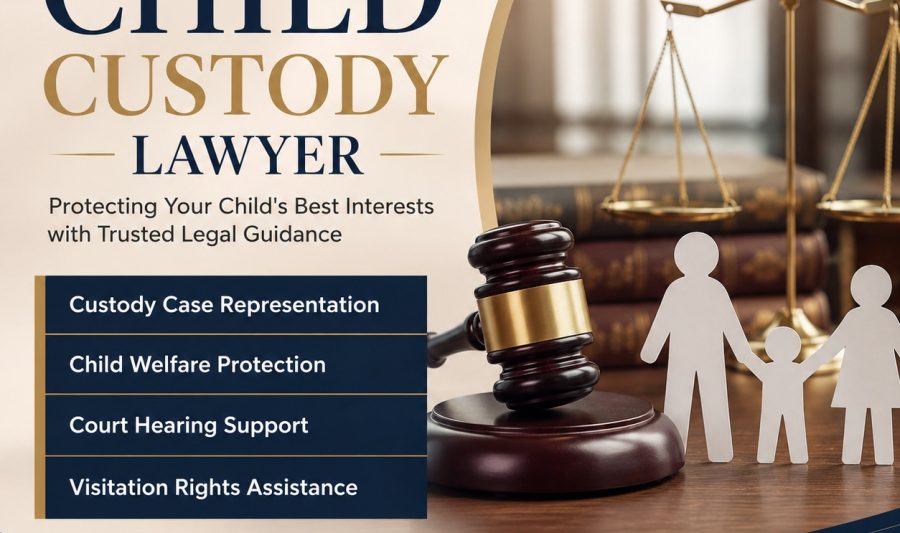
- Visitation Rights: A parent who does not have physical custody may receive scheduled access to meet or communicate with the child.
How Do Courts Decide Child Custody Cases?
The welfare of the child remains the central consideration in custody proceedings. Courts may examine the conduct of both parents, their ability to care for the child, the child’s educational requirements, living conditions, and emotional bond with each parent.
In appropriate cases, the court may also consider the child’s preference, particularly when the child is mature enough to express an independent and reasonable choice.
Legal Assistance in Child Custody Matters
Child custody disputes require careful legal representation and a practical approach focused on the child’s welfare. An experienced family law advocate can assist with filing custody petitions, responding to claims, seeking visitation rights, and presenting relevant evidence before the appropriate court.
If you are involved in a child custody dispute, obtaining timely legal advice can help you understand your rights and choose the appropriate legal remedy based on the facts of your case.
Conclusion
Child custody proceedings are not simply about which parent gets custody. The primary objective of the court is to protect the child’s best interests and ensure a stable environment for healthy growth and development. Parents facing custody disputes should seek professional legal guidance and approach the matter with the child’s welfare as the highest priority.