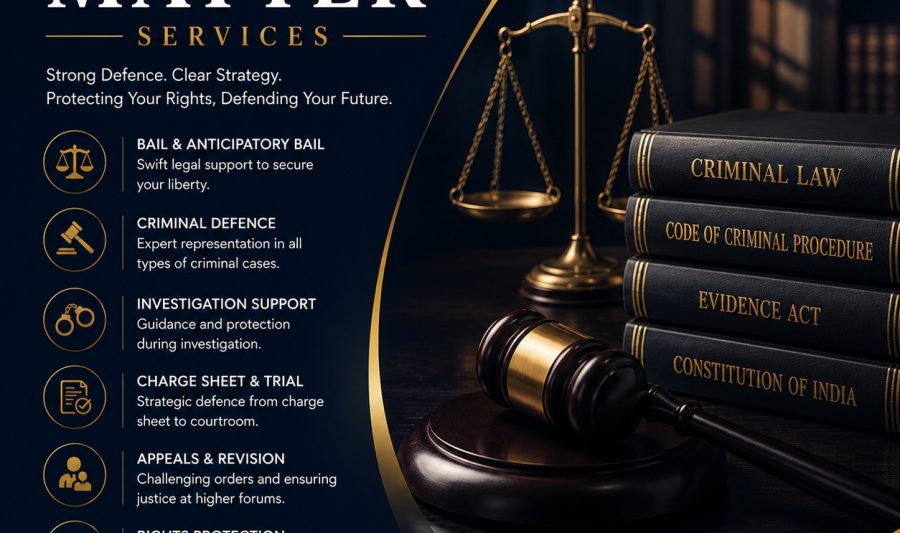
Criminal Matters: Understanding Your Legal Rights and the Importance of Proper Legal Defence
Criminal matters can arise unexpectedly and often bring uncertainty, stress, and serious consequences for the individuals involved. Whether a person is facing a criminal complaint, an FIR, an arrest, or ongoing court proceedings, understanding the legal process is essential. In such situations, having proper legal guidance can help individuals make informed decisions and protect their legal rights.
Criminal law covers a wide range of offences, from minor criminal allegations to serious offences involving imprisonment, financial penalties, or other legal consequences. Every case has different circumstances, evidence, and legal requirements. Therefore, it is important to approach each matter carefully rather than relying on assumptions or incomplete information.
In this blog, we will discuss different types of criminal matters, the legal procedures involved, and why professional legal assistance can be important throughout the process.
What Are Criminal Matters?
Criminal matters refer to legal cases involving allegations that an individual or organisation has committed an offence under applicable criminal laws. These cases may involve investigations by law enforcement authorities, filing of criminal complaints, court proceedings, and trials.
Criminal proceedings are governed by applicable Indian laws, including the Bharatiya Nyaya Sanhita (BNS), Bharatiya Nagarik Suraksha Sanhita (BNSS), and Bharatiya Sakshya Adhiniyam (BSA), which came into effect on 1 July 2024, subject to applicable transitional provisions.
A person accused of an offence has legal rights throughout the criminal justice process. These include the right to legal representation and the right to a fair trial.
Common Types of Criminal Cases in India
Criminal cases can involve different offences depending on the nature of the allegations and the circumstances. Some commonly encountered criminal matters include:
1. Criminal Assault and Physical Violence
Cases involving physical assault, threats, injuries, or violence may require investigation and legal proceedings. Medical reports, witness statements, and other supporting evidence can play an important role in these matters.
2. Cheating and Fraud Cases
Cheating and fraud cases generally involve allegations of dishonest inducement, deception, or financial wrongdoing. Such matters may arise from business transactions, property dealings, financial arrangements, or personal transactions.
The nature of the agreement, communication records, financial documents, and intention of the parties may be relevant when examining these allegations.
3. Theft, Robbery and Burglary
Theft, robbery, and related property offences involve allegations concerning the unlawful taking of property. Depending on the facts, the applicable legal provisions and potential consequences may differ.
4. Criminal Breach of Trust
Criminal breach of trust matters may arise when someone is accused of dishonestly misappropriating or converting property entrusted to them. These cases often require careful examination of financial records, agreements, and the relationship between the parties.
5. Cybercrime and Online Fraud
With increasing digital transactions and online communication, cybercrime allegations have become an important area of criminal law. These cases may involve online financial fraud, identity theft, unauthorised access, impersonation, and other technology-related offences.
Digital evidence, transaction details, electronic communication, and technical records may be relevant during investigation and court proceedings.
6. Domestic Violence and Matrimonial Criminal Matters
Certain matrimonial disputes may involve allegations of cruelty, harassment, domestic violence, or other criminal offences. Such matters require careful consideration of the facts, supporting evidence, and applicable legal remedies.
7. NDPS Cases
Cases under the Narcotic Drugs and Psychotropic Substances Act involve allegations relating to prohibited narcotic drugs and psychotropic substances. These matters can involve complex questions concerning search, seizure, possession, sampling, investigation, and statutory bail restrictions.
8. Criminal Intimidation and Threats
Criminal intimidation cases may arise when a person is accused of threatening another individual with injury to their person, reputation, or property, with the intention or knowledge required under the applicable law.
Understanding the Criminal Case Procedure in India
Many people are unfamiliar with what happens after a criminal complaint is filed. Understanding the general stages of criminal proceedings can make the process easier to navigate.
1. Filing of an FIR or Criminal Complaint
A criminal matter may begin with information given to the police or a complaint before the appropriate authority or court, depending on the nature of the alleged offence.
2. Police Investigation
The investigating authority may collect evidence, record statements, examine documents, conduct searches where legally permitted, and take other steps in accordance with applicable law.
3. Arrest and Bail Proceedings
Depending on the offence and circumstances, an accused person may face arrest or seek appropriate bail remedies. Regular bail and anticipatory bail are governed by applicable legal provisions and conditions.
4. Filing of the Chargesheet
After completing the investigation, the police may submit a police report before the competent court, where required under the applicable procedure.
5. Court Proceedings and Trial
The court examines the case, considers the evidence, hears the parties, and conducts proceedings according to law. The accused is entitled to a fair opportunity to defend the allegations.
6. Judgment and Appeal
After considering the evidence and arguments, the court delivers its decision. Depending on the nature of the order and applicable legal provisions, an aggrieved party may have a right to pursue an appeal or another appropriate legal remedy.
Why Is a Criminal Defence Lawyer Important?
Facing criminal allegations can be overwhelming, particularly when a person is unfamiliar with police procedures and court requirements. A criminal defence lawyer can assist in understanding the allegations, examining the available evidence, and identifying appropriate legal remedies.
Some important areas where legal assistance may be required include:
-
Legal Consultation: Understanding the allegations, applicable laws, and possible legal consequences.
-
Bail Applications: Preparing and presenting regular bail or anticipatory bail applications, where legally available.
-
FIR-Related Matters: Examining whether a legal remedy, including quashing proceedings, may be available.
-
Police Investigation: Advising clients about their legal rights and procedural requirements during investigation.
-
Criminal Trial Representation: Preparing legal arguments, examining evidence, and representing clients before the appropriate court.
-
Criminal Appeals: Evaluating available grounds for challenging a judgment or order.
-
Documentation and Evidence: Reviewing relevant documents, witness statements, and other material connected with the case.
The role of a lawyer is not simply to represent a client in court but also to explain the legal process and help the client understand available options.
What Should You Do If You Are Facing Criminal Charges?
If you or a family member is involved in a criminal matter, taking timely and informed steps can be important.
Consider the following points:
-
Do not ignore police notices, court summons, or other legal communications.
-
Consult a qualified criminal lawyer to understand your legal position.
-
Preserve relevant documents, messages, financial records, and other evidence.
-
Avoid making statements or taking actions without understanding their legal implications.
-
Follow applicable court directions and legal procedures.
-
Do not destroy, alter, or fabricate any evidence connected with the matter.
Taking a responsible approach from the beginning may help avoid unnecessary procedural complications.
How to Choose the Right Criminal Matters Lawyer?
Choosing legal representation is an important decision, particularly when the case involves serious allegations or complex legal issues.
Before engaging a lawyer, consider:
-
Experience in handling criminal litigation and related proceedings.
-
Familiarity with the applicable criminal laws and court procedures.
-
Ability to explain legal options clearly.
-
Careful examination of case documents and available evidence.
-
Transparent communication regarding fees and the scope of representation.
-
A professional approach towards confidentiality and client interests.
Every criminal case is different. Therefore, legal advice should be based on the specific facts rather than general assumptions.
Frequently Asked Questions (FAQs)
1. What are the different types of criminal cases in India?
Criminal cases may involve assault, theft, robbery, cheating, fraud, criminal breach of trust, cybercrime, criminal intimidation, NDPS offences, and other offences recognised under Indian law.
2. When should I consult a criminal lawyer?
You should consider consulting a criminal lawyer when you receive a police notice, face an FIR, are accused of an offence, require bail, or become involved in criminal court proceedings. Early legal advice can help you understand your rights and available remedies.
3. Can an FIR be quashed by the court?
Yes, the High Court may quash an FIR or criminal proceedings in appropriate cases under its inherent jurisdiction, subject to established legal principles and the facts of the matter. Quashing is not automatic merely because the parties have reached a settlement.
4. What is the difference between regular bail and anticipatory bail?
Regular bail generally concerns the release of a person who has been arrested or is in custody, whereas anticipatory bail is a direction for release on bail in the event of arrest, subject to statutory conditions and judicial discretion.
5. What happens if someone is falsely accused in a criminal case?
A person facing false allegations can seek legal advice, preserve relevant evidence, participate in the legal proceedings, and present an appropriate defence before the competent court. The available remedies depend on the facts and circumstances.
6. Can criminal cases be settled outside court?
Certain criminal matters may be compounded or resolved through legally recognised settlement procedures. However, not every criminal offence can be privately settled. The nature of the offence and applicable legal provisions determine whether settlement is legally permissible.
7. How long does a criminal case take in India?
The duration depends on the seriousness of the offence, complexity of evidence, number of witnesses, investigation requirements, and court workload. Some cases may conclude relatively quickly, while others can take several years.
Conclusion
Criminal matters require careful legal attention, a clear understanding of applicable laws, and proper representation throughout the proceedings. Whether the issue involves an FIR, bail application, cybercrime allegation, financial fraud, or criminal trial, understanding your rights is an important part of dealing with the situation.
Timely legal consultation can help individuals understand the available options, prepare their defence, and navigate the criminal justice system more effectively. Every person deserves a fair opportunity to present their case in accordance with the law.