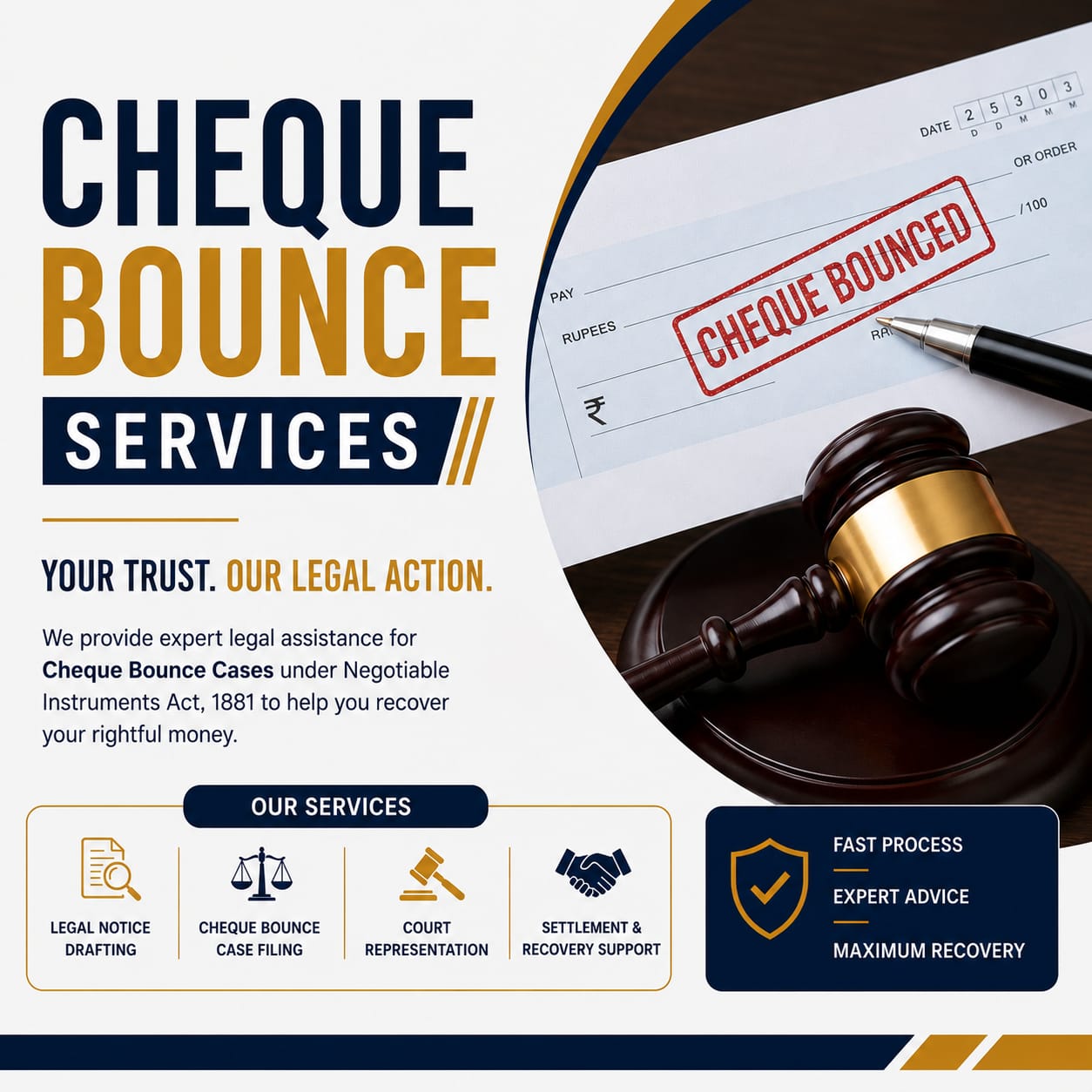
Cheque Bounce Cases in India: Legal Remedies, Procedure and Penalties.
A cheque bounce occurs when a bank returns a cheque unpaid due to reasons such as insufficient funds, account closure, payment instructions, or other banking issues. In India, cheque dishonour can lead to legal proceedings under Section 138 of the Negotiable Instruments Act, 1881, subject to the statutory requirements.
What Is a Cheque Bounce Case?
A cheque bounce case generally arises when a cheque issued towards a legally enforceable debt or liability is presented within its validity period but is dishonoured by the bank. The payee can initiate legal action if the required conditions under Section 138 are satisfied.
What Should You Do After a Cheque Is Dishonoured?
The usual legal process involves:
- The cheque is presented to the bank within its validity period.
- The bank returns the cheque unpaid and issues a return memo.
- The payee sends a written legal demand notice to the drawer within the prescribed period after receiving information about the dishonour.
- The drawer gets the statutory period to make the payment after receiving the notice.
- If payment is not made within that period, the complainant may file a complaint before the appropriate court within the prescribed limitation period.
Penalties for Cheque Dishonour
Section 138 provides for criminal liability where its requirements are fulfilled. The punishment can extend to imprisonment up to two years, a fine that may extend to twice the cheque amount, or both.
Courts may also consider compensation and other appropriate relief depending on the facts and stage of the proceedings.
How Can a Lawyer Help?
A cheque bounce lawyer can examine the cheque, bank return memo, underlying transaction, correspondence, legal notice and limitation requirements. Proper documentation is particularly important because procedural errors can affect the maintainability of a complaint.
Legal advice can also help defendants understand available remedies and prepare an appropriate response to the complaint.
Conclusion
Cheque bounce litigation requires careful compliance with statutory timelines and documentary requirements. Whether you are a complainant seeking recovery or a person facing a cheque dishonour complaint, obtaining professional legal advice at an early stage can help you understand your rights, obligations and available remedies.