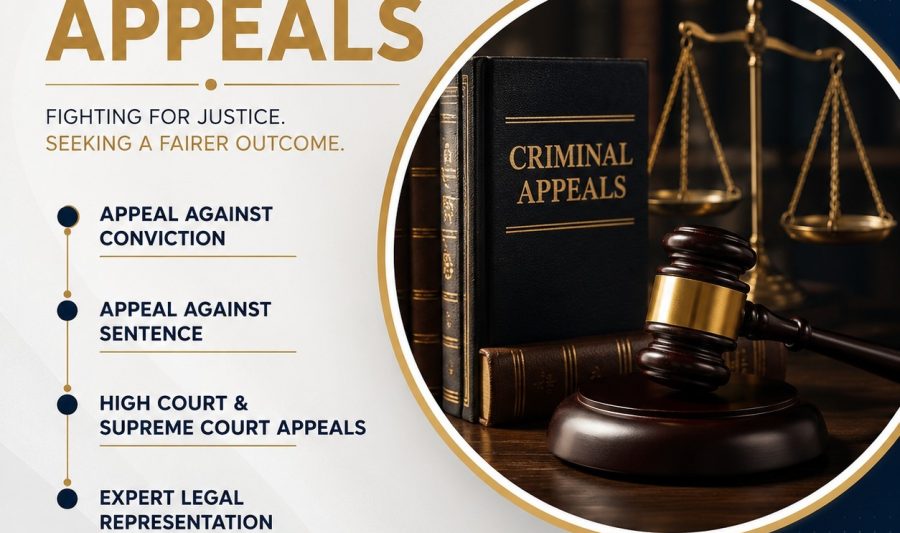
Criminal Appeals: Protecting Your Right to Challenge an Unfair Conviction
A criminal conviction can have a lasting impact on an individual’s personal, professional, and financial life. However, the legal system provides an important safeguard through the process of criminal appeals. A criminal appeal allows a convicted person to challenge a trial court’s judgment before a higher court if there are legal errors, procedural irregularities, or issues affecting the fairness of the trial.
Unlike a fresh trial, a criminal appeal is not conducted to hear new evidence. Instead, the appellate court examines the trial court’s records, evidence, legal arguments, and judgment to determine whether the decision was legally correct. If the appellate court finds significant legal errors, it may modify the sentence, order a retrial, or even overturn the conviction.
What Is a Criminal Appeal?
A criminal appeal is a legal remedy available to a person who believes that the trial court made mistakes while deciding a criminal case. Appeals may be filed against convictions, acquittals, sentencing orders, or other appealable criminal orders, depending on the applicable provisions of law.
The purpose of an appeal is to ensure that justice has been delivered fairly and in accordance with legal principles.
Common Grounds for Filing a Criminal Appeal
A criminal appeal may be filed on several legal grounds, including:
- Incorrect interpretation or application of the law.
- Procedural irregularities during the trial.
- Violation of the accused’s legal or constitutional rights.
- Insufficient or unreliable evidence supporting the conviction.
- Improper admission or rejection of evidence.
- Excessive or disproportionate sentencing.
- Errors in appreciating witness testimony or documentary evidence.
Each appeal must be supported by valid legal arguments and relevant provisions of law.
Importance of Legal Representation
Preparing a criminal appeal requires detailed legal analysis, careful examination of trial records, and strong drafting skills. An experienced criminal appellate lawyer can identify legal errors, prepare persuasive appeal documents, and effectively represent the appellant before the higher court.
Professional legal assistance improves the chances of presenting a well-structured appeal while ensuring compliance with procedural requirements and limitation periods.
Stages of a Criminal Appeal
The criminal appeal process generally includes:
- Reviewing the trial court judgment.
- Identifying legal and factual errors.
- Preparing and filing the appeal.
- Admission of the appeal by the appellate court.
- Hearing legal arguments from both parties.
- Pronouncement of the appellate judgment.
The appellate court may affirm, modify, or set aside the original judgment depending on the merits of the case.
Why Timely Action Matters
Criminal appeals are subject to statutory limitation periods. Delaying the filing of an appeal may result in procedural complications or dismissal on limitation grounds. Therefore, individuals seeking to challenge a conviction or sentence should obtain legal advice as early as possible.
Conclusion
The criminal appeal process serves as an essential safeguard against judicial errors and helps ensure that justice is administered fairly. If you believe that a criminal judgment suffers from legal or procedural defects, seeking timely legal guidance can help protect your rights and provide an opportunity for judicial review by a higher court.
A properly prepared criminal appeal, supported by sound legal reasoning and effective advocacy, can play a crucial role in correcting errors and ensuring a fair outcome under the law.