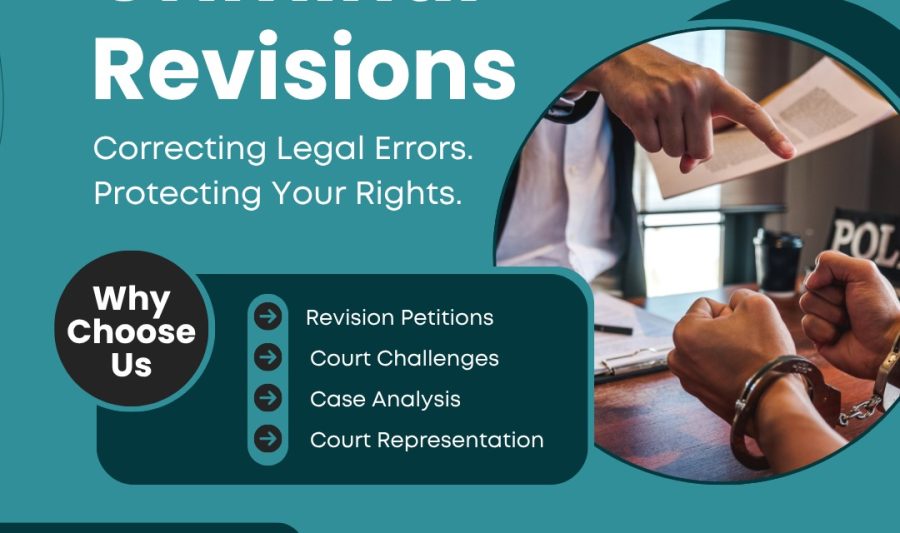
Criminal Revision Cases: Seeking Judicial Review to Correct Legal Errors
A criminal revision is an important legal remedy available when a party believes that a lower criminal court has committed a legal or procedural error. Unlike an appeal, a criminal revision is not a fresh hearing of the entire case. Instead, the revisional court examines whether the lower court acted within its jurisdiction, followed the correct legal procedure, and delivered an order that complies with the law.
Criminal revision petitions are commonly filed before the Sessions Court or the High Court against orders passed by subordinate criminal courts. The purpose is to ensure that justice is not defeated due to mistakes, irregularities, or misuse of judicial discretion.
When Can a Criminal Revision Be Filed?
A criminal revision may be filed in situations such as:
- Improper dismissal of a criminal complaint.
- Incorrect framing or discharge of charges.
- Procedural irregularities affecting the fairness of the trial.
- Illegal or arbitrary interim orders.
- Jurisdictional errors committed by the trial court.
- Orders that result in a miscarriage of justice.
Why Legal Representation Matters
Criminal revision proceedings require a detailed understanding of criminal procedure, judicial precedents, and legal drafting. An experienced criminal lawyer carefully examines the trial court’s records, identifies legal defects, prepares persuasive revision petitions, and effectively presents arguments before the revisional court.
Timely legal action is essential because criminal revision petitions are subject to statutory limitation periods. Delays may adversely affect the chances of obtaining relief.
Conclusion
Criminal revision serves as a vital safeguard against legal errors and procedural injustice. If you believe a criminal court has passed an incorrect or unlawful order, seeking professional legal advice at the earliest stage can help protect your legal rights and ensure that justice is properly served.