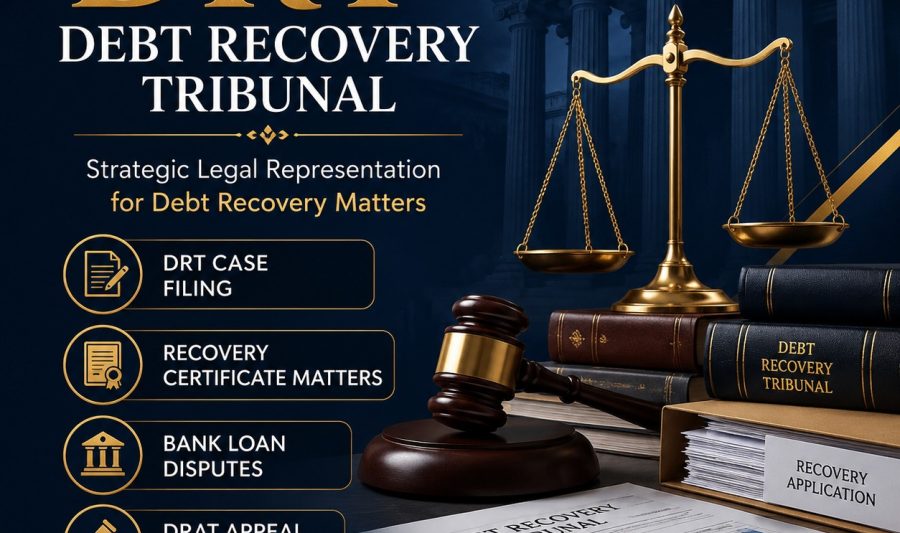
DRT Cases in India: Understanding Debt Recovery Tribunal Proceedings
Debt Recovery Tribunal (DRT) cases play a crucial role in resolving disputes involving the recovery of debts owed to banks and financial institutions. Established under the Recovery of Debts and Bankruptcy Act, 1993 (formerly the Recovery of Debts Due to Banks and Financial Institutions Act), DRTs provide a specialized forum for the speedy adjudication and recovery of debts. Businesses, borrowers, guarantors, and financial institutions frequently approach DRTs to resolve complex financial disputes efficiently.
What Are DRT Cases?
A DRT case involves legal proceedings before the Debt Recovery Tribunal concerning the recovery of loans, enforcement of security interests, or disputes arising between borrowers and banks or financial institutions. DRTs are designed to reduce the burden on civil courts by handling debt recovery matters through a dedicated judicial mechanism.
Common Types of DRT Cases
1. Loan Recovery Cases
Banks and financial institutions file applications before the DRT to recover outstanding loans from borrowers who have defaulted on repayment obligations.
2. SARFAESI Act Disputes
Borrowers may challenge actions taken by secured creditors under the Securitisation and Reconstruction of Financial Assets and Enforcement of Security Interest (SARFAESI) Act, 2002, including possession notices and asset auctions.
3. Guarantor Liability Cases
Guarantors may face legal proceedings when borrowers fail to repay loans. DRT determines the extent of liability under the guarantee agreement.
4. Mortgage Enforcement Matters
Financial institutions may seek enforcement of mortgages and other secured assets for debt recovery.
5. Corporate Debt Recovery
Businesses facing loan defaults or recovery proceedings often require legal representation before the DRT to protect their interests.
6. Recovery Certificate Execution
Once a Recovery Certificate is issued by the DRT, further proceedings may be initiated for the execution and recovery of the adjudicated amount.
DRT Case Procedure
The general process in a DRT matter includes:
- Filing of an application before the Tribunal.
- Issuance of notice to the opposite party.
- Filing of written statements and supporting documents.
- Presentation of evidence and legal arguments.
- Tribunal’s adjudication and final order.
- Issuance of a Recovery Certificate, where applicable.
- Execution proceedings for recovery of dues.
Importance of Legal Representation in DRT Cases
Experienced legal representation can assist clients by:
- Evaluating the legal merits of the case.
- Preparing applications and replies.
- Challenging unlawful recovery actions.
- Representing clients during hearings.
- Negotiating settlements where appropriate.
- Protecting borrowers’ legal rights.
- Advising on compliance with statutory procedures.
- Assisting in appeals before the Debt Recovery Appellate Tribunal (DRAT), where applicable.
Rights of Borrowers in DRT Proceedings
Borrowers are entitled to:
- Receive proper notice of proceedings.
- Present evidence and legal arguments.
- Challenge incorrect recovery claims.
- Contest valuation and auction processes where legally permissible.
- Seek relief against procedural irregularities.
- File appeals as provided under applicable law.
Tips for Handling DRT Cases
- Maintain complete loan and repayment records.
- Respond promptly to legal notices.
- Understand your contractual obligations.
- Seek legal advice before signing settlement agreements.
- Comply with Tribunal directions and deadlines.
- Explore settlement opportunities when appropriate.
- Keep records of all communications with lenders.
Why Timely Legal Assistance Matters
Delays in responding to recovery proceedings may affect a party’s legal position. Early legal guidance helps borrowers and financial institutions understand their rights, evaluate available remedies, and navigate DRT proceedings effectively while complying with applicable laws.
Conclusion
DRT cases involve significant financial and legal issues that require careful preparation and a thorough understanding of debt recovery laws. Whether you are a borrower, guarantor, or financial institution, obtaining timely legal advice and presenting a well-prepared case before the Debt Recovery Tribunal can help protect your legal rights and facilitate an efficient resolution of disputes.