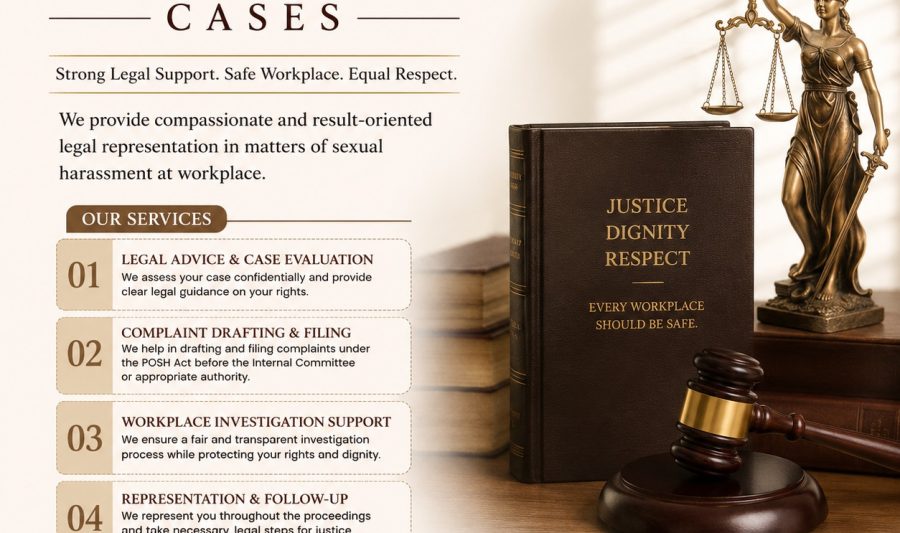
Sexual Harassment Cases in India: Legal Rights, Remedies, and the Importance of Timely Legal Action
Sexual harassment is a serious violation of an individual’s dignity, safety, and fundamental rights. It can occur in workplaces, educational institutions, public spaces, online platforms, or even within professional relationships. Indian law provides strong legal remedies to protect victims and ensure that offenders are held accountable. Seeking timely legal assistance is essential to safeguard evidence, understand legal rights, and pursue appropriate remedies.
What is Sexual Harassment?
Sexual harassment refers to any unwelcome act or behavior of a sexual nature that causes discomfort, humiliation, intimidation, or fear. Such conduct may be physical, verbal, non-verbal, or digital and can affect people regardless of gender.
Common examples include:
- Unwanted physical contact or advances.
- Sexually suggestive remarks or jokes.
- Repeated requests for sexual favors.
- Sending obscene messages, emails, or images.
- Stalking or cyber harassment.
- Displaying sexually explicit content.
- Threats or retaliation after rejecting advances.
Legal Framework in India
Sexual harassment cases may involve multiple legal provisions depending on the facts of the case. Relevant laws include:
- The Bharatiya Nyaya Sanhita (BNS), where applicable.
- The Sexual Harassment of Women at Workplace (Prevention, Prohibition and Redressal) Act, 2013.
- The Information Technology Act for cyber-related offences.
- The Protection of Children from Sexual Offences (POCSO) Act, 2012, where minors are involved.
The applicable legal provisions depend on the nature of the incident, the age of the victim, the location, and the available evidence.
Workplace Sexual Harassment
Employers are legally required to provide a safe working environment. Organizations meeting the prescribed criteria must establish an Internal Committee (IC) to investigate complaints of workplace sexual harassment. Victims have the right to file complaints without fear of retaliation and seek appropriate remedies through the prescribed legal process.
What Should Victims Do?
If you experience sexual harassment:
- Preserve all messages, emails, photographs, CCTV footage, and other evidence.
- Record important details such as dates, locations, and witnesses.
- Report the incident to the appropriate authority or employer, if applicable.
- File a police complaint when the conduct amounts to a criminal offence.
- Consult an experienced advocate to understand your legal rights and available remedies.
Legal Assistance in Sexual Harassment Cases
A skilled lawyer can assist by:
- Evaluating the legal merits of the case.
- Drafting complaints and legal notices.
- Filing FIRs or assisting during police investigations.
- Representing clients before courts and appropriate authorities.
- Protecting victims’ legal rights throughout the proceedings.
- Assisting organizations in compliance with workplace harassment laws.
Importance of Early Legal Advice
Prompt legal action can help preserve crucial evidence, strengthen the case, and improve the chances of obtaining effective legal relief. Delays may make evidence collection more difficult and affect the progress of legal proceedings.
Conclusion
Sexual harassment is a serious legal and social issue that should never be ignored. Whether the incident occurs at the workplace, online, or in public, victims have legal rights and remedies under Indian law. Seeking professional legal guidance at the earliest stage can help ensure that justice is pursued through the appropriate legal process while protecting the rights and dignity of the affected individual.